


Why Japanese Food Is Loved All Over the World
What Is Washoku?
When people think of Japanese food, many immediately picture sushi or ramen.
While these are two of Japan’s most famous dishes, they are only a small part of what people in Japan eat every day.
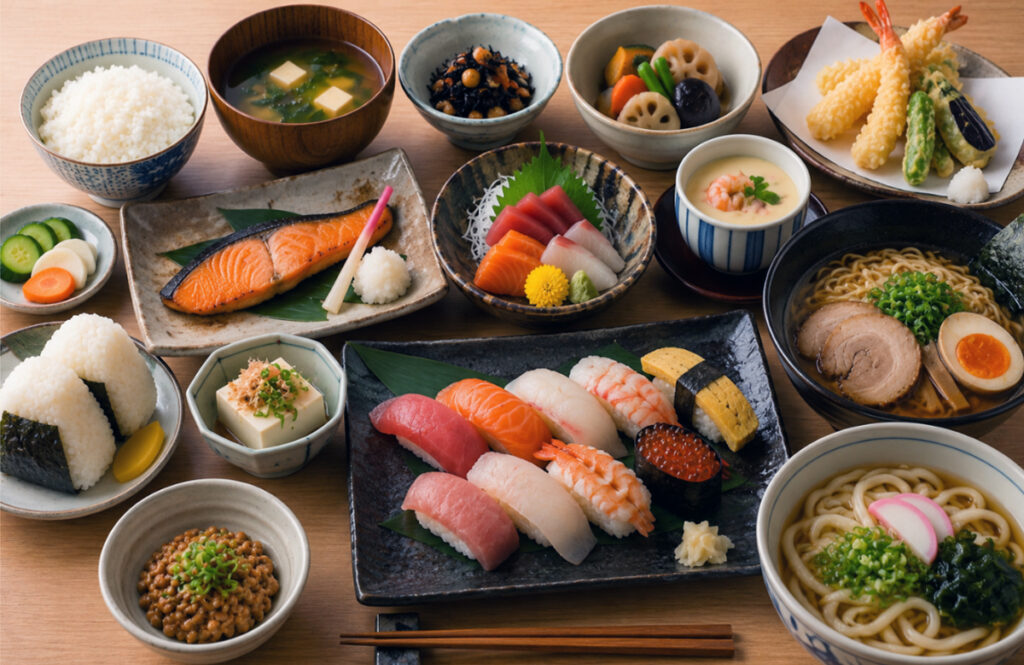
Japan has a traditional food culture called Washoku. Washoku is centered around a balanced meal of rice, miso soup, a main dish such as fish or meat, and vegetable side dishes.
Traditional meal styles such as ichiju-issai (one soup and one side dish) and ichiju-sansai (one soup and three side dishes) have been enjoyed in Japan for generations. Washoku emphasizes seasonal ingredients, nutritional balance, and beautiful presentation.
In recognition of its cultural importance, Washoku was added to UNESCO’s Intangible Cultural Heritage list in 2013.

Washoku in the ichiju-sansai style (one soup and three side dishes).
Simple, Yet Full of Flavor
One of the reasons Washoku is so delicious is its use of dashi, a traditional Japanese broth made from ingredients such as bonito flakes and kombu (kelp).
Fermented foods like miso and soy sauce also play an important role in Japanese cooking.
Together, these ingredients create umami, often described as the fifth basic taste alongside sweet, salty, sour, and bitter.
Rather than relying on heavy seasoning or strong spices, Washoku brings out the natural flavors of each ingredient. This gentle yet rich taste is one of the reasons it is loved by people around the world.
More Than Just a Meal
In Washoku, the appearance of the food is just as important as its taste.
Meals are often prepared using seasonal ingredients, allowing people to enjoy the changing seasons through food. Spring vegetables, summer noodles, autumn mushrooms, and winter hot pots all reflect different times of the year.
Careful presentation, colorful ingredients, and thoughtfully chosen tableware make every meal feel special. Traditional multi-course dining such as kaiseki (懐石料理), often served in formal settings, also reflects this attention to seasonality, balance, and visual beauty.
In Japan, food is something to enjoy with all five senses—not just taste.
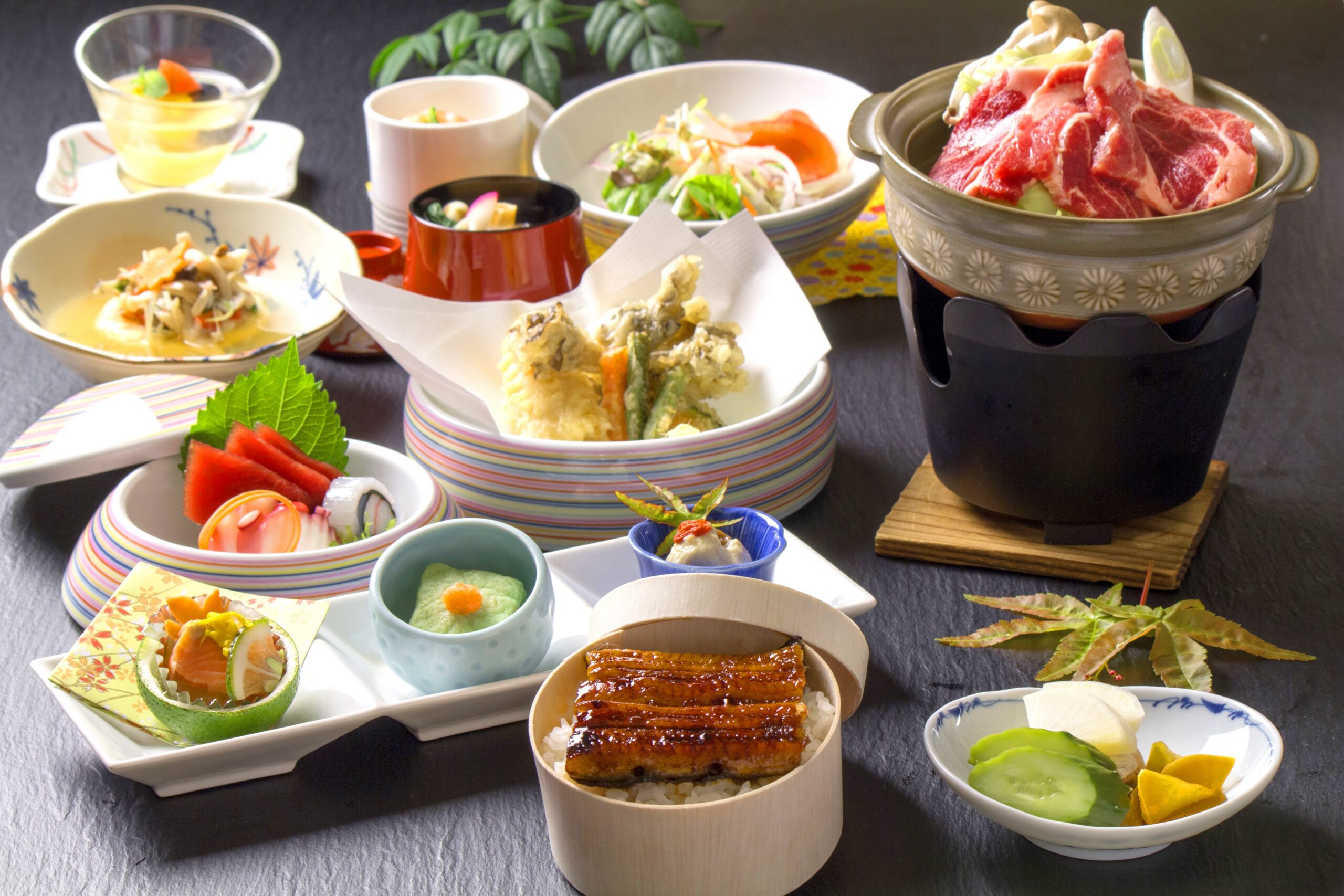
Late-summer to early-autumn kaiseki cuisine
A Gateway to Japanese Culture
Washoku is more than a style of cooking. It reflects Japanese culture, traditions, and everyday life.
Sharing meals with family, appreciating seasonal ingredients, and enjoying beautifully prepared dishes are all important parts of daily life in Japan.
During your study abroad experience, try more than just sushi and ramen. Visit a local teishoku (set meal) restaurant or enjoy a home-style Japanese meal.
Experiencing everyday Japanese food is a great way to better understand the language, culture, and lifestyle of Japan.
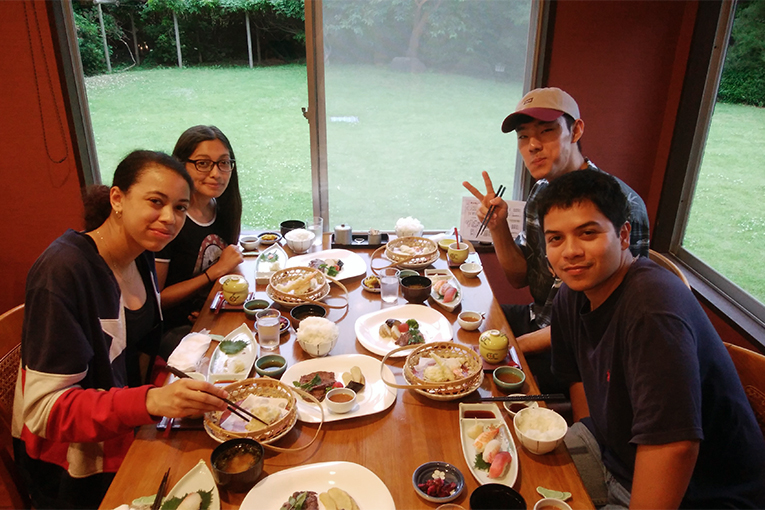
Enjoying a washoku dinner during our school excursion to Enoshima.
For many students, Japanese food becomes the first step toward deeper interest in the language and culture.
Experience Japan Through Washoku
Food is one of the most rewarding parts of studying abroad in Japan.
By experiencing Washoku, you’ll gain a deeper understanding of Japanese culture beyond the classroom.
At KCP International Japanese Language School, students not only study Japanese but also experience everyday life in Tokyo, where language and culture come together.
From neighborhood restaurants to school lunches and seasonal dishes, every meal is an opportunity to experience Japan in a new way.
Whether you’re enjoying lunch with classmates or discovering a small local restaurant, each meal offers a chance to learn something new about Japan.
We hope you’ll make Japanese food an unforgettable part of your study abroad journey.